Germany's Hotel Industry Report: The September Rebound, the Quality Divide, and the Margin Squeeze

A Comprehensive Market Analysis of Performance, Investment, and Strategic Outlook
As of September 13, 2026
Executive Summary
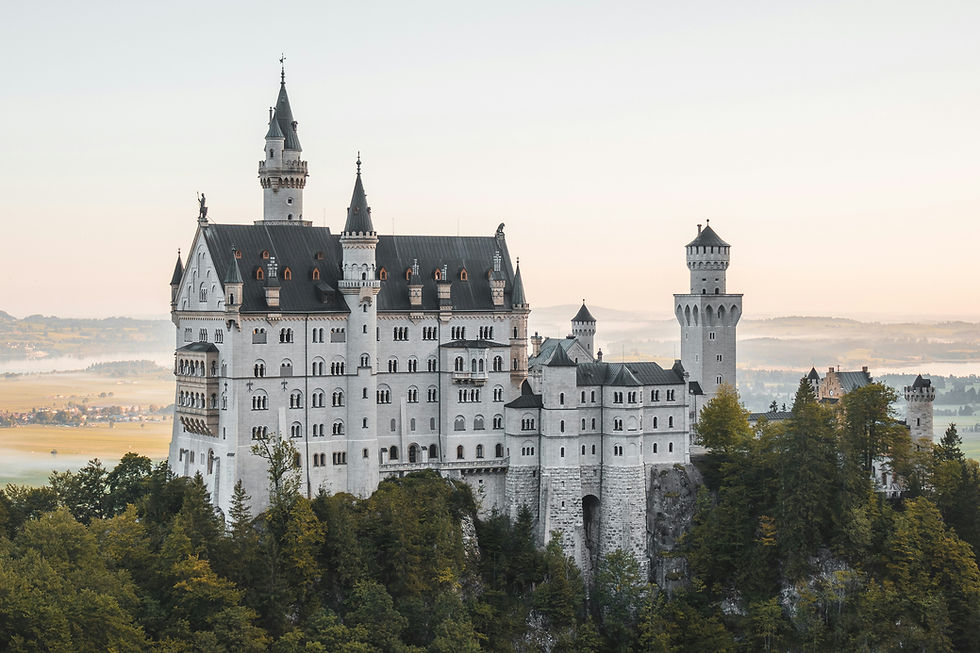
Germany's hotel industry in September 2026 is experiencing a resilient rebound characterized by record-breaking demand, stable occupancy growth, and heightened investor selectivity, yet persistent operational cost pressures continue to challenge profitability across the sector. The market has demonstrated remarkable strength in volume terms, with overnight stays reaching 282.1 million from January through July, surpassing pre-pandemic 2019 levels. National occupancy rose to 65.5% during the first half of 2026, supported by 36.4 million international overnight stays. However, this apparent resilience disguises a market that has become far more discriminating, with a widening divide between prime hotels and almost everything else.
The industry is being reshaped by several transformative forces. Investment activity has broadened considerably, with more than 50 transactions recorded in the first half of 2026—the highest figure since 2019—though average deal sizes remain modest at approximately €15 million, reflecting a market driven by smaller assets, repositioning opportunities, and selective portfolio trades rather than major core acquisitions. Munich and Berlin remain the strongest investment locations, recording €131 million and €128 million respectively in transaction volume during H1 2026. International investors account for 52% of total transaction volume, underlining Germany's continued appeal to global capital. The European hotel construction pipeline continues its upward trajectory, with Germany ranking fourth on the continent with 146 projects and 24,821 rooms under development. Continue reading (Premium Members Only) - Unlock Exclusive Advantages with a Premium Membership - Read more here
The operational environment presents a paradox of high demand and squeezed margins. Occupancy increased slightly during the first half of the year, but room rates showed little corresponding movement, meaning revenue growth came mainly through higher volumes rather than pricing. Gross operating profit declined compared with the same period last year as operators found it increasingly difficult to pass higher labor, energy, and financing costs through to room rates. Booking windows have shortened markedly since the pandemic, making price increases riskier and leaving operators to absorb a growing share of cost inflation. Germany remains one of the most expensive operational environments in Europe for hospitality, compounded by index-linked leases and heavy bureaucracy that squeeze profit margins.
Looking ahead, the industry faces a critical juncture. The German National Tourist Board expects further growth during the second half of 2026, with 46% of international travel industry decision-makers currently rating their Germany business positively—an increase of 21 percentage points from the previous quarter. However, the sector must navigate significant structural challenges, including severe labor shortages, rising insolvencies among traditional accommodation providers, and the growing imperative to adopt AI-driven revenue management and ESG compliance. The market is rewarding quality and punishing weakness, with prime city-center properties commanding strong interest while secondary locations and legacy assets face prolonged repricing. Continue reading (Premium Members Only) - Unlock Exclusive Advantages with a Premium Membership - Read more here
Current Market Performance and Key Metrics
Record-Breaking Demand and Overnight Stays
Germany's tourism sector has demonstrated exceptional resilience in 2026, with overnight stays reaching record levels that surpass even pre-pandemic benchmarks. From January through July 2026, the country recorded 282.1 million overnight stays, representing a 0.9% increase year-on-year and outperforming the previous 2019 record. This performance builds on the strong momentum of the first half, during which hotels, guesthouses, and other accommodation establishments recorded 223.8 million overnight stays—the highest figure ever recorded for a half-year period Continue reading (Premium Members Only) - Unlock Exclusive Advantages with a Premium Membership - Read more here
The domestic market remains the backbone of Germany's tourism industry, with domestic overnight stays rising 0.3% to 187.4 million during the first half of 2026. However, international demand has shown encouraging signs of recovery, with foreign overnight stays increasing 0.5% to 36.4 million. The June performance was particularly notable, with international overnight stays rising 1.6% compared with the same month last year, signaling a gradual acceleration in inbound tourism. Continue reading (Premium Members Only) - Unlock Exclusive Advantages with a Premium Membership - Read more here
This record-breaking performance reflects Germany's enduring appeal as a destination, supported by its central location, connectivity, value proposition, and reputation as a safe destinatio Continue reading (Premium Members Only) - Unlock Exclusive Advantages with a Premium Membership - Read more here
Occupancy and Rate Performance
Hotel occupancy across Germany increased by 1.2 percentage points to 65.5% during the first six months of the year, according to MKG International. National baseline occupancy hovers near 67-68%, though major urban hubs and event-driven destinations see higher spikes. Munich's hotel occupancy averages roughly 71% during the broader Oktoberfest window, peaking at 78% during the core festival days with Average Daily Rates climbing to €368. Continue reading (Premium Members Only) - Unlock Exclusive Advantages with a Premium Membership - Read more here
However, the relationship between occupancy and profitability has become increasingly decoupled. Across approximately 20 hotels in Germany, Austria, and Switzerland analyzed by mrp hotels, occupancy increased slightly during the first half of the year, but room rates showed little corresponding movement. Revenue growth therefore came mainly through higher volumes rather than pricing, while gross operating profit declined compared with the same period last year. Operators are finding it increasingly difficult to pass higher labor, energy, and financing costs through to room rates, with booking windows shortening markedly. Continue reading (Premium Members Only) - Unlock Exclusive Advantages with a Premium Membership - Read more here
The divergence between segments is pronounced. Luxury and upscale properties maintain pricing power and resilient demand, while economy and midscale segments face tight margins due to high labor, energy, and operational overhead. This pattern is reflected in broader sector performance, with BWH Hotels reporting a 2.1% decline in average daily rate to €108.12 in H1 2026, even as occupancy rose from 54.8% to 57% . The increase in occupancy was sufficient to offset the rate decline, with RevPAR rising 1.8% to €61.63 . Continue reading (Premium Members Only) - Unlock Exclusive Advantages with a Premium Membership - Read more here
Regional Performance and Urban Dynamics
Germany's regional performance presents a nuanced picture, with significant variation across different markets. North Rhine-Westphalia recorded growth of 5% in overnight stays during the first five months of 2026, supported by Düsseldorf and Cologne, where trade fairs helped lift overnight stays by around 10%. Bavaria, Baden-Württemberg, Hamburg, and Munich were broadly flat, while Berlin recorded a decline of around 3%.
The international source market composition continues to evolve. India remained stable with a marginal 0.1% increase in overnight stays, maintaining the previous year's level -6-14. The top 10 German cities accounted for around 61% of all Indian overnight stays, led by Munich with 150,000, followed by Berlin with 123,000 and Frankfurt with 109,000. The Indian audience for Germany is young and experience-driven, with an average traveler age of 38 years and approximately 95% of Indian travelers below the age of 55, highlighting the market's significant long-term potential.
Munich and Berlin remain the strongest hotel investment locations nationwide, recording €131 million and €128 million respectively in transaction volume during H1 2026. However, both markets fell below 2025 levels, with Munich declining 50% and Berlin 29%, as the prior year's results were boosted by trophy asset transactions including the Mandarin Oriental in Munich and the Steigenberger am Kanzleramt in Berlin. Continue reading (Premium Members Only) - Unlock Exclusive Advantages with a Premium Membership - Read more here
The Cost-Pressure Paradox
The defining characteristic of Germany's hotel market in 2026 is the paradox of high demand and squeezed margins. Hoteliers report that high occupancies do not automatically translate to high net profitability, as escalating operational expenditure cuts into gross operating profits -1. Germany remains one of the most expensive operational environments in Europe for hospitality, compounded by index-linked leases and heavy bureaucracy that squeeze profit margins.
Labor costs, energy expenses, and financing costs have all risen significantly, yet operators find it difficult to pass these increases through to room rates. Booking windows have shortened markedly since the pandemic, making price increases riskier and leaving operators to absorb a growing share of cost inflation. Guests exhibit heightened price consciousness, comparing rates more actively across channels and booking closer to the actual arrival date.
The pressure on margins is compounded by the structural characteristics of the German market. Finding staff for front offices, housekeeping, kitchens, and revenue management remains a daily bottleneck limiting strategic growth. Traditional accommodation providers have seen business insolvencies surge well above pre-crisis levels despite stable overall occupancy rates around 68%. Smaller and independent properties struggle to adopt modern revenue management systems and meet strict, non-negotiable sustainability and ESG financing mandates. Continue reading (Premium Members Only) - Unlock Exclusive Advantages with a Premium Membership - Read more here
Investment Trends and Transaction Activity
Broadening Activity with Modest Deal Sizes
The German hotel investment market has demonstrated a notable broadening of activity in 2026, with more than 50 transactions recorded in the first half—the highest figure since 2019. This compares with around 35 deals in each of the two preceding years and just 28 transactions in the first half of 2023. The market is significantly more active in terms of transaction count, reflecting growing investor interest and improving liquidity.
However, the market continues to be driven predominantly by smaller transactions. The average deal size currently stands at approximately €15 million and has remained at this relatively low level since 2022, apart from the first half of 2025. This reflects a market driven by smaller assets, repositioning opportunities, and selective portfolio trades rather than major core acquisitions. The largest transaction in the first half was Aroundtown's sale of six Penta hotels to Ogilvy Capital for approximately €275 million.
Estimates of first-half transaction volume vary by methodology, ranging from approximately €572 million at Savills to €790 million at BNP Paribas Real Estate, with JLL placing the figure at €741 million. The comparison with 2025 requires qualification, as the first half of 2025 was boosted by three unusually large transactions involving Motel One Upper West in Be Continue reading (Premium Members Only) - Unlock Exclusive Advantages with a Premium Membership - Read more here
Investor Composition and Strategy
The investor composition reflects the changing dynamics of the German hotel market. High-net-worth individuals and family offices accounted for 37% of investment volume, according to JLL, marginally ahead of institutional investors at 35%. Value-add and opportunistic strategies represented around 60% of investment, underlining the preference for refurbishment, operator change, and repositioning.
Overseas investors were responsible for more than half of all transactions, underlining Germany's continued appeal to international capital. BNP Paribas Real Estate places the international investor share at 52% of total transaction volume. This sustained international interest reflects the strong operating performance indicators and guest and overnight stay figures that in many locations have returned to or even exceeded pre-pandemic levels.
German institutional investors have been actively divesting older assets, contributing to the market's dynamism. Union Investment's sale of properties including Park Plaza Wallstreet Berlin and Courtyard by Marriott Munich City Centre exemplifies this portfolio re Continue reading (Premium Members Only) - Unlock Exclusive Advantages with a Premium Membership - Read more here
Prime Yields and Market Outlook
Prime hotel investment yields stand firm at 5.50%, with transaction volumes rebounding strongly following 2025's €2.7 billion peak. Christie & Co reports that hotel investment volume surged by over 78% year-on-year in 2025, driven by strengthening buyer demand. Full-year figures for 2025 highlighted Berlin (€638 million) and Munich (€516 million) as the top-performing cities in terms of transaction volume.
The outlook for the remainder of 2026 appears cautiously optimistic. BNP Paribas Real Estate points to a filled pipeline of mid-sized deals, with various transactions in the market above the €100 million mark. A full-year investment volume of around €2 billion remains achievable, provided several larger transactions currently under negotiation complete during the second half. JLL similarly sees a total value in this range, while CBRE expects more activity as the economic environment stabilizes and ongoing due diligence processes conclude.
The market's discriminating character is expected to persist. Capital and operator demand remain available, but only where location, product quality, sponsor strength, and lease structure meet increasingly demanding standards. Prime city-center properties with established operators continue to attract interest, secure financing, and command strong rents, while secondary locations, peripheral assets, hotels burdened by legacy leases, and operators with weak balance sheets face a much harder environment. Continue reading (Premium Members Only) - Unlock Exclusive Advantages with a Premium Membership - Read more here
The Development Pipeline: Europe's Fourth Largest
National Pipeline Overview
Germany maintains its position as one of Europe's largest hotel development markets, ranking fourth on the continent with 146 projects and 24,821 rooms in the pipeline at the close of Q2 2026. The country trails only the United Kingdom (263 projects), Turkey (156 projects), and France (117 projects) in project count. The pipeline reflects sustained developer confidence in the German market, though elevated construction and financing costs have limited new developments and created favorable conditions for value-add strategies and asset repositioning.
The broader European context is equally significant. The region's total pipeline stands at 1,736 projects and 255,976 rooms, representing a 3% increase in both projects and rooms year-over-year. Projects in the early planning stage reached a record-high 631 projects and 89,472 rooms, up 11% by projects and 13% by rooms, now accounting for 36% of projects and 35% of rooms in the region's total pipeline. This record level of early planning activity suggests sustained developer interest in the German and European markets, even as near-term construction starts face headwinds. Continue reading (Premium Members Only) - Unlock Exclusive Advantages with a Premium Membership - Read more here
The chain scale composition of the European pipeline reflects the premium positioning of development activity. The luxury chain scale reached a record-high 187 projects and 21,930 rooms, up 9% by projects year-over-year. The upper upscale chain scale also reached a record-high 304 projects and 50,181 rooms, up 11% by projects and 13% by rooms. The upscale chain scale leads all segments with 400 projects and 61,639 rooms, up 8% by both projects and rooms. This concentration in the upper segments reflects the broader trend toward premium and lifestyle positioning across the European hospitality market. Continue reading (Premium Members Only) - Unlock Exclusive Advantages with a Premium Membership - Read more here
Key Pipeline Cities and Regional Focus
At the city level, Hamburg leads Germany's pipeline with 25 projects and 4,789 rooms, up 4% by projects and 6% by rooms year-over-year. Hamburg's strong pipeline reflects the city's importance as a commercial and logistics hub, with continued demand from corporate travelers and the MICE sector. The city has also benefited from significant infrastructure investment and the growth of its media and technology sectors.
Berlin continues to attract significant development interest, though the city's pipeline has moderated from previous peaks. The capital's hotel market benefits from its status as Germany's political and cultural center, with strong demand from both leisure and business travelers. Munich remains a key market for luxury and upscale development, supported by its strong economy, cultural attractions, and role as a gateway to the Alps. Frankfurt maintains its position as a key market for business and MICE-focused development, benefiting from its status as Germany's financial capital and aviation hub.
Beyond the major cities, secondary destinations are attracting growing development interest. The shift toward adaptive reuse projects—including the conversion of old office spaces into serviced apartments—reflects the changing dynamics of the development landscape. Brands like Scandic are actively expanding via selective asset repositioning, while developers favor conversion projects over ground-up construction. Continue reading (Premium Members Only) - Unlock Exclusive Advantages with a Premium Membership - Read more here
Renovations and Conversions
The European hotel renovation and conversion market remains robust, with 640 projects and 82,841 rooms combined. This reflects the growing emphasis on repositioning existing assets to meet modern standards and capture the growing demand for premium hospitality experiences. The conversion trend is particularly strong in Germany, where high construction costs and limited land availability have made new development challenging.
The shift toward conversions and repositioning is evident in the operational strategies of major operators. Hotel chains are actively expanding across luxury, economy, and extended-stay segments, responding to evolving traveler preferences. Digitalization and AI-powered guest experience tools are being deployed to mitigate cost pressures, address labor shortages, and enhance personalization.
The pipeline of renovations and conversions also reflects the growing emphasis on sustainability and ESG compliance. Properties lacking certifications will struggle to access capital and attract buyers, making renovation and repositioning essential for owners seeking to maintain asset value. The focus on ESG is driving investment in energy efficiency, waste reduction, and sustainable operations, adding to the cost burden but also creating opportunities for differentiation. Continue reading (Premium Members Only) - Unlock Exclusive Advantages with a Premium Membership - Read more here
New Openings and Notable Reopenings
In the first half of 2026, 112 new hotels with 13,914 rooms opened across Europe, with an additional 195 projects and 25,884 rooms forecasted to open in the third and fourth quarters. For the year, Lodging Econometrics forecasts 307 new hotels and 39,798 rooms to open across Europe, with 303 new hotel openings and 42,729 rooms projected for 2027. For the first time, LE is now forecasting 2028 new hotel openings for Europe, projecting 304 new hotels and 43,099 rooms to open that year. Continue reading (Premium Members Only) - Unlock Exclusive Advantages with a Premium Membership - Read more here
Notable reopenings and new openings in Germany include the Althoff Dom Hotel in Cologne and Scandic Berlin Kurfürstendamm, which are expanding upper-tier and modernized capacity. The Dom Hotel project has been particularly challenging, with the construction site taking 13 years from demolition to renovation and new construction, with the building inspection acceptance scheduled for the second quarter of 2026 and the official opening date still unclear. Once opened, the Althoff-operated five-star-plus hotel with approximately 130 rooms will be Cologne's second five-star hotel alongside the Excelsior Hotel Ernst. Continue reading (Premium Members Only) - Unlock Exclusive Advantages with a Premium Membership - Read more here
The Scandic Berlin Kurfürstendamm represents the growing emphasis on modernized capacity in prime urban locations. These reopenings and new openings reflect the continued investment in Germany's hotel stock, with operators and developers focusing on upgrading existing assets and adding premium inventory in key markets. Continue reading (Premium Members Only) - Unlock Exclusive Advantages with a Premium Membership - Read more here
Industry Challenges and Strategic Pressures
The High-Cost Operating Environment
Germany's hotel industry faces persistent structural margin pressure driven by one of the highest operational cost structures in Europe. Germany remains one of the most expensive operational environments for hospitality, compounded by index-linked leases and heavy bureaucracy that squeeze profit margins. The cost pressures span labor, energy, and financing, with operators finding it increasingly difficult to pass these increases through to room rates.
The profitability challenge is particularly acute because high occupancies do not automatically translate to high net profitability. Hoteliers report that escalating operational expenditure cuts into gross operating profits even as demand remains strong. Across approximately 20 hotels analyzed by mrp hotels, occupancy increased slightly during the first half of the year, but room rates showed little corresponding movement, while gross operating profit declined compared with the same period last year.
The structural nature of these cost pressures suggests they will persist beyond the current cycle. Index-linked leases, heavy bureaucracy, and regulatory compliance requirements create a fixed cost burden that limits flexibility for operators. The German Tourism Association (DTV) has highlighted that many businesses face enormous pressure from rising costs, staff shortages, and growing investment backlogs, requiring political support through increased investment in tourism infrastructure and better conditions for skilled worker recruitment. Continue reading (Premium Members Only) - Unlock Exclusive Advantages with a Premium Membership - Read more here
Labor Shortages and Workforce Challenges
Finding staff for front offices, housekeeping, kitchens, and revenue management remains a daily bottleneck limiting strategic growth. The labor shortage is a critical constraint on the industry's ability to capitalize on strong demand, forcing operators to limit services, reduce operating hours, or accept lower service standards. The challenge is compounded by the structural shifts in working conditions and rising wage demands that have characterized the post-pandemic labor market. Continue reading (Premium Members Only) - Unlock Exclusive Advantages with a Premium Membership - Read more here
The workforce challenge extends beyond recruitment to retention and skills development. The industry requires workers with increasingly sophisticated skills, including digital proficiency, revenue management expertise, and the ability to deliver personalized guest experiences. However, the sector struggles to attract and retain talent, particularly in competition with other industries offering better working conditions and career prospects. Continue reading (Premium Members Only) - Unlock Exclusive Advantages with a Premium Membership - Read more here
The German Tourism Association has emphasized the need for better framework conditions for skilled worker recruitment. However, the structural challenges facing the industry suggest that labor shortages will remain a persistent constraint, requiring operators to invest in automation, technology, and workforce development to maintain service standards and operational efficiency. Continue reading (Premium Members Only) - Unlock Exclusive Advantages with a Premium Membership - Read more here
Rising Insolvencies and Market Consolidation
Traditional accommodation providers have seen business insolvencies surge well above pre-crisis levels despite stable overall occupancy rates around 68%. The insolvency wave reflects the structural pressures facing the industry, particularly for smaller and independent operators who lack the scale and resources to manage the high-cost environment effectively.
The insolvency of Revo Hospitality Group has become an important test of the relationship between hotel owners and operators. Public reports suggest replacement operators have been identified for more than 120 hotels, creating the impression of an orderly restructuring. However, the scale of the restructuring underscores the challenges facing the industry, with many properties requiring repositioning and rebranding to restore profitability.
The consolidation trend is likely to continue as the market rewards quality and punishes weakness. Prime city-center properties with established operators continue to attract interest and secure financing, while secondary locations, peripheral assets, and hotels burdened by legacy leases face a much harder environment. This distinction is likely to drive further consolidation, with stronger operators and investors acquiring weaker assets at discounted prices. Continue reading (Premium Members Only) - Unlock Exclusive Advantages with a Premium Membership - Read more here
Technology Adoption and ESG Compliance Gaps
Smaller and independent properties struggle to adopt modern revenue management systems and meet strict, non-negotiable sustainability and ESG financing mandates. The technology and ESG gaps create a competitive disadvantage for smaller operators, making it difficult to compete with larger chains that have the resources to invest in advanced systems and sustainability certifications.
AI integration is beginning to provide some relief for operators who can implement it. Mid-scale and independent properties are increasingly adopting automated AI tools and advanced revenue management platforms to handle seasonality-based pricing and reduce OTA commission reliance. AI-supported staff scheduling, food-waste management, and automated check-in can lower operating costs, but implementation remains uneven, particularly within larger hotel groups. Technology is helping operators protect margins, although not yet at a scale sufficient to offset the full increase in costs.
The ESG compliance challenge is particularly acute because sustainability standards are non-negotiable for financing. Properties lacking certifications will struggle to access capital and attract buyers. The growing emphasis on sustainability and ESG compliance requires significant investment in energy efficiency, waste reduction, and sustainable operations, adding to the cost burden for operators, particularly those with limited financial resources. Continue reading (Premium Members Only) - Unlock Exclusive Advantages with a Premium Membership - Read more here
Strategic Responses and Industry Outlook
The Quality-Driven Market Divide
The defining characteristic of Germany's hotel market in 2026 is the widening divide between prime hotels and almost everything else. Capital and operator demand remain available, but only where location, product quality, sponsor strength, and lease structure meet increasingly demanding standards. Prime city-center properties with established operators continue to attract interest, secure financing, and command strong rents.
Secondary locations, peripheral assets, hotels burdened by legacy leases, and operators with weak balance sheets face a much harder environment.
This quality-driven divide is reshaping the investment landscape. Value-add and opportunistic strategies represented around 60% of investment, underlining the preference for refurbishment, operator change, and repositioning. Investors are seeking properties with strong operating fundamentals, premium locations, and the potential for yield growth through strategic repositioning, rather than broad-market acquisitions.
The market's discriminating character is expected to persist and intensify. As the industry navigates the high-cost environment, the gap between winners and losers will likely widen, with well-positioned, well-managed properties continuing to thrive while weaker assets face prolonged repricing and operational restructuring. Continue reading (Premium Members Only) - Unlock Exclusive Advantages with a Premium Membership - Read more here
Technology and AI Integration
Technology adoption is becoming increasingly critical for competitiveness in Germany's hotel market. A growing number of mid-sized properties are transitioning from static spreadsheets to modern Revenue Management Systems to cope with shorter booking windows and price-sensitive travelers. AI integration is helping operators protect margins through automated staff scheduling, food-waste management, and automated check-in, though implementation remains uneven.
More mid-to-large operators lean on automated, AI-driven dynamic pricing tools to protect RevPAR and capture last-minute demand without sacrificing yield. These tools enable operators to respond to market conditions in real time, adjusting prices based on demand signals and competitive dynamics. The adoption of AI-powered revenue management is becoming a key differentiator between operators who can navigate the challenging environment and those who struggle.
The technology gap between large and small operators is a significant concern. Smaller and independent properties struggle to adopt modern revenue management systems, creating a competitive disadvantage. Bridging this gap will require investment in training, affordable technology solutions, and industry-wide collaboration to share best practices and resources. Continue reading (Premium Members Only) - Unlock Exclusive Advantages with a Premium Membership - Read more here
Sustainability and ESG Compliance
ESG standards and sustainability are becoming non-negotiable for financing. Properties lacking certifications will struggle to access capital and attract buyers. The growing emphasis on sustainability reflects both regulatory requirements and investor expectations, with institutional capital increasingly requiring certified sustainable assets.
The ESG compliance challenge is particularly acute for smaller and independent properties, which may lack the resources to invest in sustainability certifications and energy efficiency upgrades. The cost of compliance adds to the already high operational burden, creating a further disadvantage for smaller operators. However, the growing demand for sustainable hospitality also creates opportunities for differentiation, with properties that can demonstrate strong ESG credentials commanding premium pricing and attracting environmentally conscious travelers.
The German hotel industry's focus on sustainability aligns with broader national and European Union priorities. The transition to a low-carbon economy is creating both challenges and opportunities for the hospitality sector, with energy efficiency investments offering the dual benefit of reducing costs and improving environmental performance. Continue reading (Premium Members Only) - Unlock Exclusive Advantages with a Premium Membership - Read more here
The Third Quarter Outlook and Forward Momentum
The German National Tourist Board forecasts ongoing expansion of inbound tourism throughout 2026, with its Travel Industry Expert Panel indicating a more positive outlook for the third quarter. 46% of international travel industry decision-makers currently rate their Germany business positively, an increase of 21 percentage points from the previous quarter. Meanwhile, 53% expect their business situation to improve over the next six months. Continue reading (Premium Members Only) - Unlock Exclusive Advantages with a Premium Membership - Read more here
Germany's central location, connectivity, value proposition, and reputation as a safe destination are expected to support continued inbound tourism demand. The combination of cities, heritage, nature, and onward connections across Europe remains a key draw for international travelers, particularly from growth markets such as India. Continue reading (Premium Members Only) - Unlock Exclusive Advantages with a Premium Membership - Read more here
The record-breaking performance in overnight stays provides a strong foundation for continued growth. With 282.1 million overnight stays from January through July, surpassing pre-pandemic levels, the German market has demonstrated its resilience and appeal. However, translating this volume into profitability remains the central challenge, requiring operators to navigate the high-cost environment through pricing discipline, operational efficiency, and strategic investment. Continue reading (Premium Members Only) - Unlock Exclusive Advantages with a Premium Membership - Read more here
General Manager and Executive Career Opportunities
Overview of Leadership Roles
The transformation of Germany's hotel market, driven by the quality divide, the growing emphasis on technology and ESG compliance, and the persistent cost pressures, has created opportunities for General Managers and other executive roles across the country. The acute labor shortage, rising operational costs, and increasing focus on operational efficiency place particular emphasis on leaders who can drive performance, manage talent effectively, and deliver exceptional guest experiences while maintaining profitability.
Qualifications and Experience Requirements
General Manager positions in Germany's hotel sector typically require extensive experience in hotel management, often exceeding eight to ten years, with a proven track record in senior leadership roles at four or five-star properties. A degree in Hospitality Management, Business Administration, or a related field is generally expected, and experience with international brands is particularly valued. Continue reading (Premium Members Only) - Unlock Exclusive Advantages with a Premium Membership - Read more here
Notable Opportunities and Market Demand
The expansion of the luxury and upper-upscale pipeline is creating leadership opportunities across Germany. The Althoff Dom Hotel in Cologne, scheduled for completion following a complex 13-year construction project, will require an experienced General Manager Continue reading (Premium Members Only) - Unlock Exclusive Advantages with a Premium Membership - Read more here
The growing focus on technology and revenue management is creating opportunities for leaders with expertise in d Continue reading (Premium Members Only) - Unlock Exclusive Advantages with a Premium Membership - Read more here
Emerging Competencies for Leaders
The current market environment has highlighted several emerging competencies required for effective leadership in Germany's hotel industry. The ability to drive p Continue reading (Premium Members Only) - Unlock Exclusive Advantages with a Premium Membership - Read more here
The growing importance of revenue management and A Continue reading (Premium Members Only) - Unlock Exclusive Advantages with a Premium Membership - Read more here
Outlook and Future Projections
Market Growth Forecast
Germany's hotel industry is projected to continue its growth trajectory, with the German National Tourist Board forecasting ongoing expansion of inbound tourism throughout 2026 -6. The record-breaking performance in overnight stays, with 282.1 million from January through July surpassing pre-pandemic levels, provides a strong foundation for continued growth. The outlook is supported by Germany's central location, connectivity, value proposition, and reputation as a safe destination.
The investment outlook remains positive, with a full-year investment volume of around €2 billion achievable, provided several larger transactions currently under negotiation complete during the second half -1. The pipeline of mid-sized deals and transactions above the €100 million mark suggests continued activity in the market. The European construction pipeline continues its upward trajectory, with 307 new hotels and 39,798 rooms forecast to open across Europe in 2026. Continue reading (Premium Members Only) - Unlock Exclusive Advantages with a Premium Membership - Read more here
Key Growth Drivers
Several factors are expected to drive continued growth for Germany's hotel industry. The continued recovery of international tourism, with 36.4 million international overnight stays in H1 2026, will support hotel demand across the country. The expansion of international brands and the development of new properties will add capacity in key markets and attract new travelers. The growing emphasis on technology and ESG compliance will enhance competitiveness and support premium positioning.
The MICE sector's continued strength will support performance in major cities, with trade fairs and events driving demand in Düsseldorf, Cologne, Munich, and Frankfurt. The growing demand for experience-driven travel will support the development of lifestyle and boutique properties that cater to evolving traveler preferences. Continue reading (Premium Members Only) - Unlock Exclusive Advantages with a Premium Membership - Read more here
Strategic Priorities for the Industry
Germany's hotel industry must address several strategic priorities to sustain its growth momentum. Managing the high-cost environment and improving profitability is the most critical priority, requiring continued investment in operational efficiency, technology, and revenue management. Addressing the labor shortage through effective recruitment, training, and retention strategies is essential to meeting the sector's staffing needs.
Navigating the ESG compliance requirements and investing in sustainability is increasingly important for accessing capital and attracting environmentally conscious travelers. Leveraging technology, particularly AI and revenue management systems, to improve efficiency and guest experiences will be critical to maintaining competitiveness. Finally, the industry must continue to advocate for political support to address structural challenges, including investment in tourism infrastructure and improved conditions for skilled worker recruitment. Continue reading (Premium Members Only) - Unlock Exclusive Advantages with a Premium Membership - Read more here
Conclusion
Germany's hotel industry in September 2026 stands at a critical juncture, navigating the tension between record-breaking demand and persistent structural margin pressure. The market has demonstrated remarkable resilience in volume terms, with overnight stays reaching 282.1 million from January through July, surpassing pre-pandemic 2019 levels. National occupancy rose to 65.5% during the first half of 2026, supported by 36.4 million international overnight stays -6. However, this apparent resilience disguises a market that has become far more discriminating, with a widening divide between prime hotels and almost everything else.
The investment landscape reflects this discriminating character. More than 50 transactions were recorded in the first half of 2026—the highest figure since 2019—though average deal sizes remain modest at approximately €15 million. Munich and Berlin remain the strongest investment locations, recording €131 million and €128 million respectively. International investors account for 52% of total transaction volume, underlining Germany's continued appeal to global capital. Prime hotel investment yields stand firm at 5.50%, with a full-year investment volume of around €2 billion achievable.
The development pipeline remains robust, with Germany ranking fourth in Europe with 146 projects and 24,821 rooms. The European pipeline continues its upward trajectory, with 1,736 projects and 255,976 rooms, representing a 3% increase year-over-year. The luxury and upper upscale segments reached record highs, reflecting the premium positioning of development activity. Continue reading (Premium Members Only) - Unlock Exclusive Advantages with a Premium Membership - Read more here
However, the industry faces significant challenges. Germany remains one of the most expensive operational environments for hospitality, compounded by index-linked leases and heavy bureaucracy. Occupancy increased slightly during the first half of the year, but room rates showed little corresponding movement, while gross operating profit declined. Finding staff for front offices, housekeeping, kitchens, and revenue management remains a daily bottleneck. Traditional accommodation providers have seen business insolvencies surge well above pre-crisis levels. Smaller and independent properties struggle to adopt modern revenue management systems and meet ESG financing mandates. Continue reading (Premium Members Only) - Unlock Exclusive Advantages with a Premium Membership - Read more here
For hospitality professionals, the current environment offers significant opportunities for those with the right skills and experience. The key competencies for success include strategic revenue management, talent development, technology adoption, sustainability expertise, and the ability to deliver authentic, high-quality experiences that differentiate properties in a competitive market. Continue reading (Premium Members Only) - Unlock Exclusive Advantages with a Premium Membership - Read more here
The outlook for Germany's hotel industry remains cautiously positive, with continued growth expected through 2026 and beyond. The combination of strong demand fundamentals, a robust development pipeline, and sustained investor confidence positions Germany as a leading destination for hospitality investment and a compelling story of resilience and transformation. As the industry navigates the challenges of cost pressures, labor shortages, and regulatory complexity, the long-term objective remains clear: to build a more sustainable, efficient, and competitive hospitality sector that delivers exceptional experiences to travelers while supporting Germany's position as one of Europe's premier tourism destinations. Continue reading (Premium Members Only) - Unlock Exclusive Advantages with a Premium Membership - Read more here
Source List
REFIRE - "Germany's hotel market rewards quality and punishes weakness" (July 2026). Analysis of market discrimination between prime and secondary assets; occupancy increase without corresponding rate movement; gross operating profit decline; investment volume estimates (Savills €572m, BNP Paribas €790m, JLL €741m); transaction activity with 50+ deals; investor composition (HNWIs/family offices 37%, institutional 35%); overseas investors 52% share; Penta Hotels portfolio sale (€275m); insolvency of Revo Hospitality Group.
Savills Deutschland - "Hotelinvestmentmarkt Deutschland - Q2 2026" (July 2026). Transaction volume of €572 million in H1 2026; 45% decline year-on-year; Q2 volume of €360 million; serviced apartments transaction volume of nearly €100 million, exceeding full-year results of 2023-2025.
Christie & Co - "Business Outlook 2026 | Hotels" (2026). Germany investment volumes up 78% year-on-year in 2025; Berlin and Munich leading activity; value-add strategies amid constrained new supply; predictions for continued growth with divergence across markets.
BNP Paribas Real Estate - "Hotel-Investmentmarkt Deutschland Q2 2026" (July 2026). Transaction volume of €790 million in H1 2026; 50+ transactions for first time since 2019; average deal size €15 million; Munich (€131m) and Berlin (€128m) leading markets; international investors 52% share; Penta Hotel portfolio driving three-digit million segments......- Continue reading (Premium Members Only) - Unlock Exclusive Advantages with a Premium Membership - Read more here
Unlock Exclusive Advantages with a Premium Membership - Read more here
The Team
at LEADING HOTELIERS NETWORK / JOB LEAD SERVICE
To gain immediate access, you can either renew your membership or sign up by choosing membership here: 3 Months / 6 Months / 12 Months / Premium Membership
We're still accepting a few new- & returning members in 2026.
Disclaimer
This research report is provided for informational purposes only and does not constitute professional, financial, legal, or investment advice. The information contained herein is based on sources deemed reliable; however, no guarantee is made as to its accuracy, completeness, or timeliness. The authors and publishers of this report do not assume any liability for any losses or damages arising from the use of this information. Readers are encouraged to conduct their own independent research and consult with appropriate professionals before making any decisions based on this report. Any opinions expressed herein are those of the authors and do not necessarily reflect the views of any affiliated institutions, organizations, or stakeholders. The report may include forward-looking statements that are subject to uncertainties and risks, and actual results may differ materially. By accessing this document, you agree that the authors and publishers shall not be held responsible for any direct or indirect consequences resulting from its use.


Comments